
Acrylic vs PU Flooring – Which Costs Less to Maintain Over 10 Years
It’s Not Just About the Price Tag
When schools, sports academies, and facility managers pick a sports floor, most of them look at one number: the installation cost. But that’s only half the story. The real question is, how much will this floor cost you over the next 10 years? That’s where acrylic and PU flooring tell very different stories. Both are popular. Both are used across India. But over a decade of use, one tends to be far kinder on your budget than the other.
Thinking about the right surface for your facility? Start with our sports flooring overview for Indian facilities.
First, What Even Are These Two Floors?
Acrylic Flooring – The Outdoor Workhorse
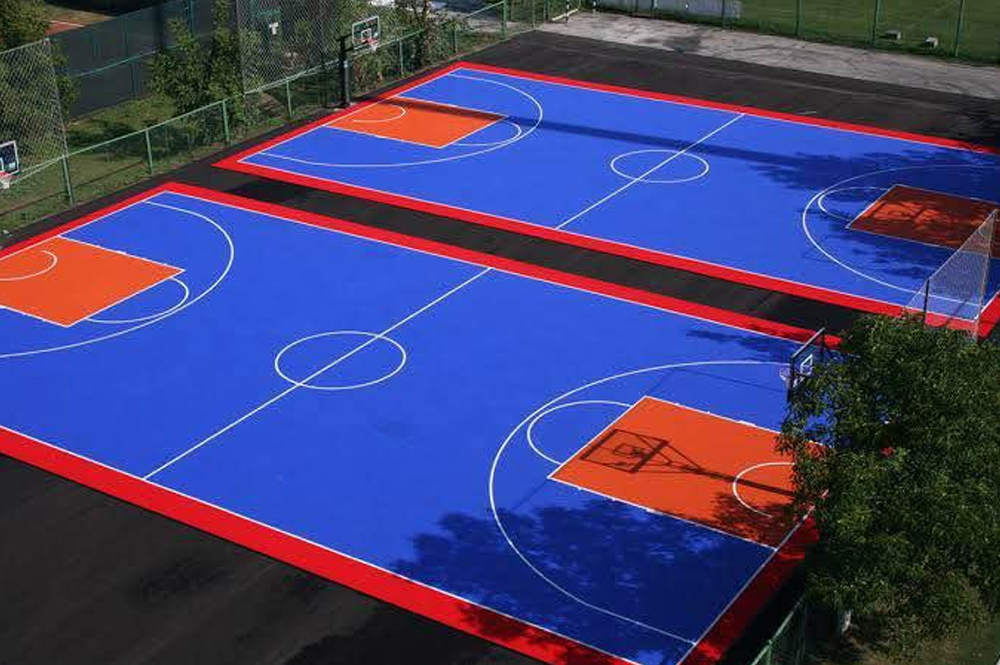
Acrylic flooring is made of layers of acrylic resin, silica sand, and pigment applied over a concrete or asphalt base. It’s the kind of surface you’ll see on outdoor basketball courts, tennis courts, and multi-sport playgrounds. At Dayal Sports, acrylic flooring is built with high-hardness, dye-resistant acrylate emulsion polymer and hydrophobic nano-silica fibres, designed to hold colour, resist wear, and stay safe for players year after year.
Want to see what goes into an acrylic court? Explore our hard-wearing outdoor court systems.
PU Flooring – The Indoor Performer
PU stands for Polyurethane. It’s a softer, more elastic surface, the kind that feels springy under your feet. It’s commonly used in indoor badminton halls, basketball courts, and professional indoor arenas. Dayal’s Silicon PU flooring is a silicone-modified polyurethane, environmentally friendly, with good weather resistance, wear resistance, and water permeability. It’s built for performance and comfort, especially indoors.
If indoor comfort is your priority, take a look at our cushioned surfaces for professional indoor courts.
How Much Does Installation Cost?
Before talking about maintenance, let’s put installation costs in perspective. Acrylic flooring in India typically costs around ₹70 to ₹250 per square foot, depending on the number of layers, base preparation, and location. PU flooring usually costs nearly double, around ₹150 to ₹220 per square foot, because it requires more precise installation conditions, specialised chemicals, and longer curing time. So right from day one, acrylic starts at a lower cost. But installation is just the beginning.
Understanding the full cost picture before you build saves you a lot of surprises. Our Products & Services guide is a good place to start.
Years 1 to 3 – Both Look Good
Acrylic needs only sweeping and occasional washing. PU needs specialised cleaning agents; use the wrong one and surface damage begins quietly. A small difference now, a higher cost later.
Year 3 to 6 – The Gap Shows
Outdoors – PU Starts Struggling
UV rays yellow PU. Monsoon moisture blisters it from below. Repairs need professional blending and cost more than expected. Acrylic stays stable, dries fast after rain, and needs no specialist touch.
Our UV-resistant surfaces, built for Indian weather, handle every season without complaint.
Indoors – PU Still Holds
Indoors with no sun or moisture, PU keeps its elasticity and performance through this phase. Maintenance is still manageable.
Our elastic flooring systems for indoor sports halls are worth a look if this fits your setup.
Year 6 to 8 – Resurfacing Time
Acrylic – Quick and Affordable
Fresh acrylic coats go right over the existing base, like repainting a wall. Fast, affordable, no demolition needed.
Our long-life acrylic court surfaces make every resurfacing cycle easy.
PU – Costly and Complex
Outdoor PU may need full re-laying. Even indoors, resurfacing needs dust-free conditions and specialist tools, all adding to the bill.
Year 8 to 10 – The Real Total
Acrylic – Low and Predictable
One resurfacing. Minimal annual upkeep. No specialist needed for routine care. The 10-year total is low and easy to plan for.
PU – Higher but Worth It Indoors
Outdoor PU may need replacement before year 10. Indoors, cumulative costs are higher, but the comfort and performance payoff is real for premium facilities.
Explore our high-performance polyurethane court solutions.
Which One Is Right for You?
Choose Acrylic if your court is outdoors, your budget is real-world, and you want a surface anyone can maintain. It’s the practical choice for schools, academies, and community facilities across India.
Choose PU if your court is indoors, climate-controlled, and player joint protection is the priority. It costs more, but in the right setting, it earns it.
Why Dayal Sports?
Founded by Dr. Yuva Dayalan, former International Badminton Player and Yoga Champion, Dayal Sports delivers Olympic-standard flooring across India and Asia. Every system passes national performance testing for shock absorption, friction, fire resistance, and air quality. One partner. One process. Zero guesswork.
For more product details, visit our complete sports flooring range at dayalssports.in
For enquiries and contact details, visit dayalssports.com