
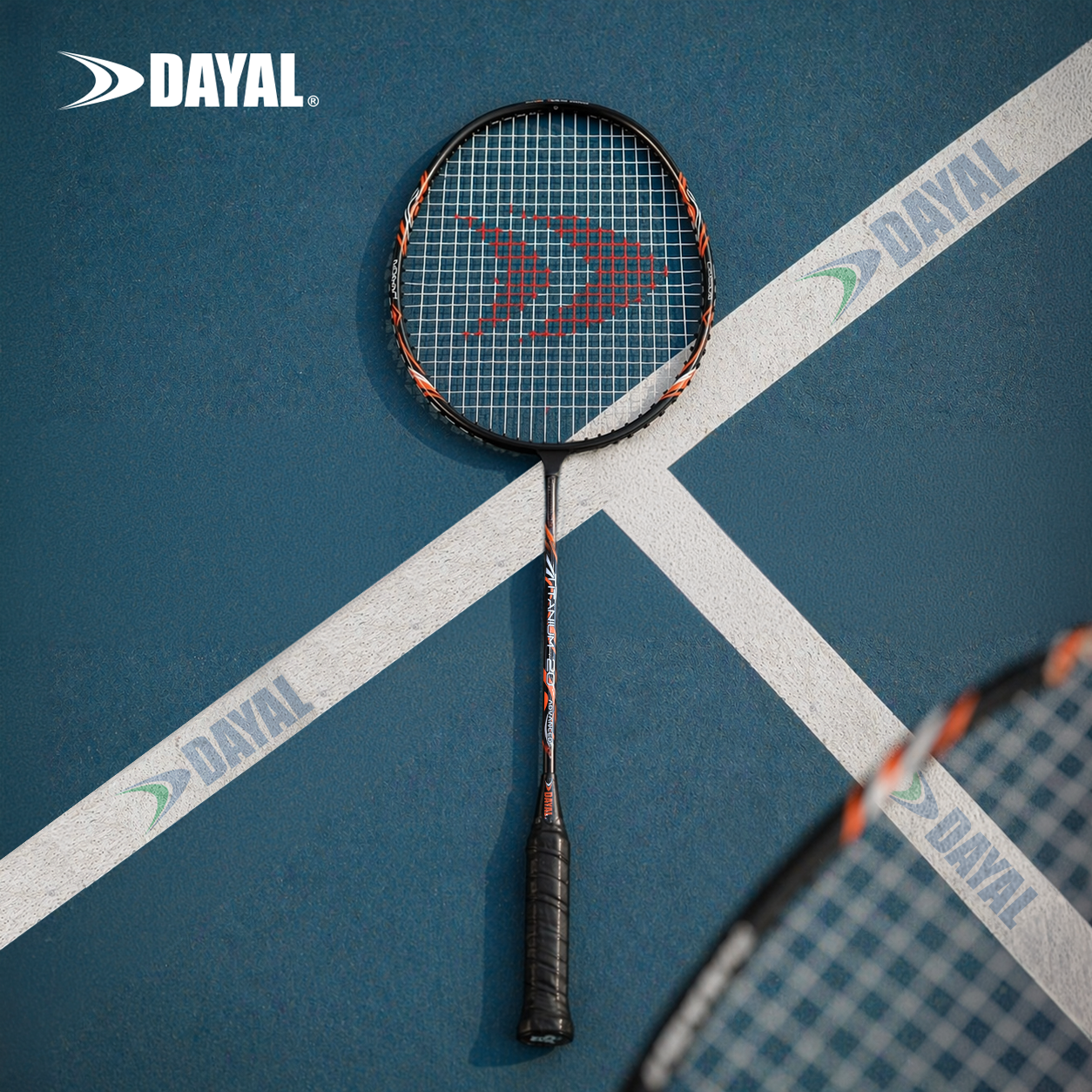
Beginner vs Professional Badminton Rackets: Understanding the Differences
Walking into a sports store and staring at a wall of badminton rackets can feel overwhelming. They all look similar, but the price tags are very different. So what exactly separates a beginner racket from a professional one? If you are trying to figure that out, Dayal Sports has rackets built for every level of player, and understanding a few basics will help you choose the right one without second-guessing yourself.
It Starts with the Material
The most visible difference between a beginner and a professional racket is what it is made from. Beginner rackets are usually made from aluminium or a basic steel alloy. These materials are affordable and durable, and can handle the kind of rough use that comes with learning the game. They are heavier than high-end options, but that is perfectly fine for someone who is still figuring out footwork and strokes.
Professional rackets are made from carbon fibre or graphite. These materials are significantly lighter and stiffer, which allows experienced players to generate more power and control with less effort. Carbon fibre rackets also respond better to precise wrist movements, which is something only an experienced player can actually take advantage of.
Weight Makes a Big Difference
A beginner racket typically weighs around 90 to 100 grams. That sounds light, but after an hour of play, your arm definitely knows the difference. Professional rackets are usually in the 80 to 85 gram range, and some advanced models go even lighter.
The reason professionals use lighter rackets is simple. At a competitive level, a fraction of a second in reaction time can change the outcome of a rally. A lighter racket allows faster swing speeds, quicker recoveries between shots, and less fatigue over a long match. For a beginner, this level of sensitivity is not necessary yet, and the slightly heavier racket actually helps with building proper swing mechanics.
The Balance Point Tells You a Lot
- Beginner rackets are usually even-balanced or slightly head-light. This makes them forgiving and easy to control, which helps new players get a feel for the game without fighting the racket.
- Professional rackets come in a wider range of balance points. Attacking players use head-heavy rackets for powerful smashes. Defensive players prefer head-light rackets for quick reactions. Players choose based on their style, not just their level.
Shaft Flexibility: Beginner-Friendly vs Precision-Focused
Beginner rackets tend to have flexible or medium-flex shafts. A flexible shaft bends slightly on impact and helps push the shuttle further, even when the technique is not perfect. This is very forgiving for someone who is still developing their swing.
Professional rackets usually come with stiff or extra-stiff shafts. A stiff shaft transfers energy directly from the swing to the shuttle with very little give. This gives experienced players incredible accuracy, but it demands good technique. In the hands of a beginner, a stiff shaft can feel unresponsive and even uncomfortable.
String Tension Is Another Gap
Most beginner rackets come pre-strung at lower tension, usually around 20 to 22 pounds. This is ideal for players who are learning, because lower tension gives a larger sweet spot and more power on off-centre hits.
Professional rackets are often strung at 28 pounds or higher. At that tension, the sweet spot becomes smaller, and the strings respond much faster. Only players with consistent technique can actually benefit from high string tension. For a beginner, high tension often means more mishits and a lot of frustration.
Price Reflects Purpose, Not Just Brand
It is tempting to think that spending more always means playing better. That is not true in badminton, especially at the beginner stage. A professional racket in the hands of someone who just started playing will not improve their game. In fact, it may slow down their progress because the racket is too demanding for where their skills currently are.
The right approach is to match the racket to where you are right now and upgrade as your game grows.
What Dayal Sports Offers
Dayal Sports has a well-rounded racket range that covers both ends of this spectrum. The DJ Series is built for junior beginners between 3 and 8 years old, with lighter frames and smaller grips that suit young hands. For older beginners and intermediate players, the D LAK Series and Y Series offer solid options with good build quality at accessible price points. The Max Power Series steps up for players who are ready for a more performance-oriented racket.
Whether you are buying your first racket or upgrading after a couple of years of regular play, the range at Dayal Sports has something that fits where you are in your game.
When Should You Upgrade?
This is a question a lot of players ask. A few signs that you are ready to move from a beginner to an intermediate or professional racket include:
- You are playing at least three to four times a week.
- Your technique feels stable, and you are hitting the shuttle cleanly most of the time.
- You feel like your current racket is slowing down your shots or limiting your control.
- You have started competing in club matches or local tournaments.
There is no fixed timeline. Some players are ready to upgrade after six months. Others take a year or two. The racket should feel like it is holding you back before you change it, not before.
One Racket Does Not Fit Everyone
Even within the professional category, there is no single racket that suits every player. A doubles specialist and a singles player will often choose completely different rackets even at the same skill level. Playing style, physical strength, grip size, and personal preference all play a role. The goal is always to find a racket that feels like an extension of your arm, not something you are fighting against.
For more product details, visit www.dayalssports.in. For contact details and to speak with the team, visit www.dayalssports.com.