
Blogs
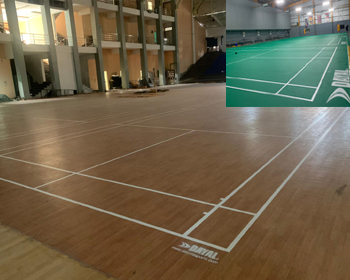
Wooden Sports Flooring
Wooden Sports Flooring: Why It’s Still the Gold Standard for Indoor Courts
Walk into any professional badminton hall, basketball arena, or volleyball stadium and look down. You’ll almost always see wood. Not concrete. Not vinyl. Not rubber. Wood.
After decades of new flooring materials entering the market, wooden sports flooring has held its place at the top. There’s a reason for that, and it comes down to what wood actually does for athletes that other surfaces can’t fully replicate.
It’s Not Just Wood – It’s an Engineered System
This is where most people get it wrong. A professional wooden sports floor is not ordinary hardwood laid over concrete. It looks the same from above, but underneath, it’s a completely different product.
Dayal’s 5-layer maple wooden floor is a multi-layer suspension system, each layer doing a specific job:
- Layer 1 – Vapour barrier: Sits on the concrete sub-floor, blocking moisture that would warp the wood above
- Layer 2 – EPDM rubber pads: The primary shock absorbers compress on impact, protecting knees and ankles
- Layer 3 – Pine wood runner frame: Creates an air gap that lets the floor flex slightly under load, giving it that responsive, energetic feel
- Layer 4 – Structural plywood: Provides a perfectly flat, stable base for the surface boards
- Layer 5 – Maple surface boards: 21mm tongue-and-groove boards with a two-component polyurethane sports lacquer, calibrated for traction, smoothness, and durability
Laying ordinary timber over concrete gives you a surface that looks like a sports floor but performs like concrete. The 5-layer system is what makes it actually perform, and it shows in every training session.
What It Does for Athletes
- Absorbs shock properly – Professional wooden floors absorb 50–65%+ of impact forces from jumping and pivoting. Concrete absorbs essentially nothing. That difference accumulates into real joint stress over weeks and months of training.
- Returns energy – The pine runner frame and air gap allow the floor to flex and spring back property called area elasticity. Athletes on wooden courts feel noticeably less fatigued at the end of long sessions than those on rigid surfaces.
- Consistent ball rebound – Badminton, basketball, and volleyball all depend on predictable shuttle and ball behavior. A properly built wooden floor delivers consistent rebound corner-to-corner, year after year, so the skills developed in training transfer accurately to competition.
- Right grip, not too much – The polyurethane finish provides safe traction without the locking grip that creates torque injuries on sudden stops.
Why Maple?
Maple is the global standard for professional sports floors, and it’s used in every NBA court and BWF-certified badminton venue for good reason.
It’s dense enough to withstand thousands of impacts. Flexible enough to absorb energy rather than transmit it. Its smooth grain is splinter-free and provides predictable, uniform ball bounce. And its natural light color reflects arena lighting well, a real advantage in fast-moving sports where tracking the ball at speed matters.
Dayal’s 5-layer system is built and installed to meet the standards, passing professional performance tests by national sports quality supervision and inspection centers, along with fire resistance and air quality detection tests.
Maintenance in Plain Terms
Wood needs more care than vinyl or acrylic, but it’s manageable and worth it.
- Daily: Sweep after every session. Never let water sit on the surface.
- Weekly: Damp mop with a pH-neutral sports floor cleaner. Never flood wash.
- Every 5–8 years: Machine sand and refinish to restore the surface to near-new condition.
With proper care, a Dayal wooden sports floor lasts 20–25 years, making it an excellent long-term investment despite the higher upfront cost.
Is Wooden Flooring Right for Your Facility?
Yes, if:
- You’re building a professional badminton, basketball, or volleyball academy
- Athletes train for long daily sessions where joint protection matters
- The space is fully enclosed with stable temperature and humidity
Consider alternatives if:
- The facility is outdoors or semi-covered
- Budget is tight, and PVC courts will serve the use case adequately
- The installation timeline is very short
What Dayal Sports Delivers
Dayal Sports installs 5-layer wooden sports flooring to Olympic and international standards across India and Asia. Their wooden flooring range covers school sports halls, club academies, and national competition venues all built to the same standard. Planning a wooden sports floor for your facility? Dayal Sports provides expert specification, supply, and installation of professional wooden sports flooring across India and Asia.
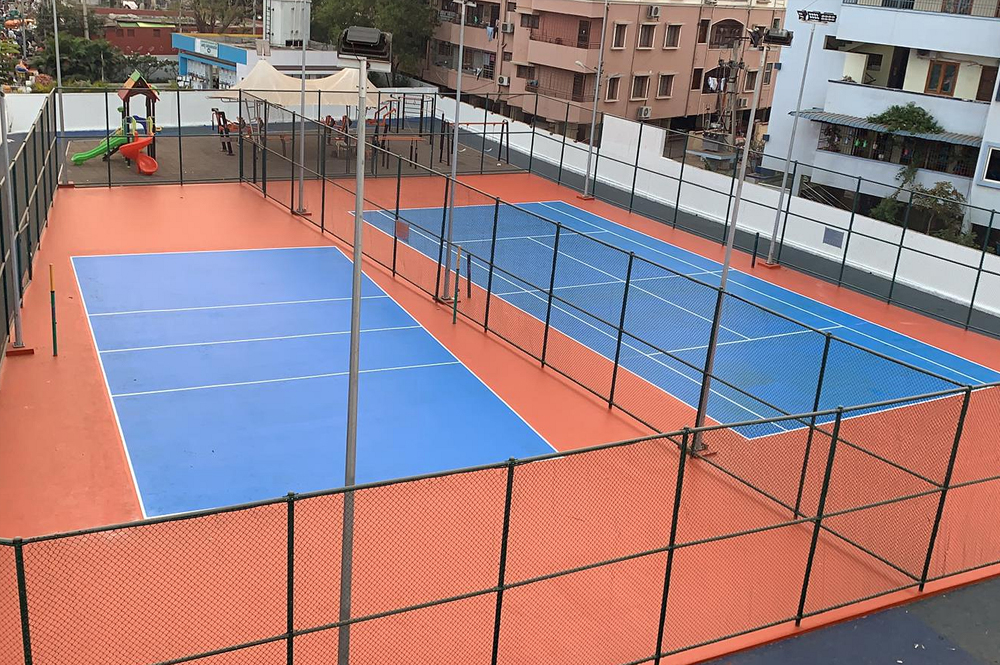
PU vs Acrylic Sports Flooring
PU vs Acrylic Sports Flooring: Which Is Better for Your Facility?
Two surfaces dominate most sports court conversations in India: PU (polyurethane) and acrylic. Both are widely used, both look professional, and both will get you a far better result than bare concrete. But they’re built for completely different environments, and picking the wrong one is an expensive mistake that’s difficult to undo.
This isn’t a case of one being universally better. It’s about which one is right for your sport, your location, your budget, and your facility goals. Here’s a clear breakdown to help you decide.
PU Flooring – What It Is and How It Works
PU is a liquid-applied polyurethane compound that cures directly over a prepared concrete base into a seamless, elastic, joint-free surface. There are no tiles, no seams, no edges, just a continuous cushioned layer that bonds fully to the sub-floor.
That seamlessness is its biggest practical advantage. No joints means no edges to catch a foot, no gaps to trap dirt, and no weak points where moisture can seep underneath. Athletes move across the full surface without any interruption, which matters enormously in fast-moving sports like badminton, basketball, and martial arts.
Dayal’s PU flooring is highly preferred for its durability, environmentally friendly nature, non-slippery surface, impact absorption, and easy installation. It’s used across indoor gyms, badminton halls, yoga studios, weightlifting areas, and multi-sport training centers.
Acrylic Flooring – What It Is and How It Works
Acrylic sports flooring is a multi-layer coating system built up over a prepared concrete or asphalt base. Dayal’s patented formulation uses high-hardness acrylate emulsion polymer combined with hydrophobic nano-silica fibres, pigments, and fillers. Each successive layer adds traction, cushioning, weather protection, and color.
What makes acrylic genuinely different from standard court paint is the formulation depth. The nano-silica fibres improve hardness and UV stability at a molecular level. The aggregate in the top coat layers is adjustable; different hardness and slip resistance can be obtained by mixing different proportions of materials, meaning the final surface can be calibrated for specific sports and site conditions rather than applied as a one-size-fits-all coating.
Acrylic was built for outdoor environments. It handles UV radiation, monsoon downpours, thermal cycling, and the heavy daily abrasion of open-air facilities without losing grip or color integrity. For the Indian climate, intense sun, high humidity, and heavy seasonal rain, it’s the natural outdoor choice.
The Core Difference: It Comes Down to Location
Is your court indoors or outdoors?
PU belongs indoors – full stop. When exposed to India’s combination of intense UV, heat, and monsoon moisture, PU yellows, softens, and develops surface bubbles. It’s engineered for climate-controlled environments where temperature and humidity stay stable. Take it outside, and it degrades faster than expected.
Acrylic belongs outdoors – and semi-covered courts too. It was formulated specifically to handle weather exposure and performs consistently through peak Indian summer heat and monsoon downpours without warping, fading, or cracking.
For an outdoor badminton court at a school, housing society, or sports club, acrylic is the clear choice. For a professional indoor training hall where athletes are putting in long daily sessions, PU earns its premium.
How They Perform for Athletes
Beyond the environment question, it’s worth understanding what each surface actually feels like underfoot because that difference is real.
PU flooring on athlete performance: The seamless elastic surface returns energy with every step. Athletes on PU courts describe a noticeably softer, more responsive feel compared to concrete or even hardwood. For sports involving repetitive high-impact movement badminton jumps, basketball drives, and martial arts training, this translates into lower fatigue levels during long sessions. Joints absorb less cumulative stress, which means athletes can train harder for longer before fatigue sets in.
Acrylic flooring on athlete performance: Acrylic provides a firm, textured surface with consistent traction and reliable ball rebound. It doesn’t offer the elastic cushioning of PU, but cushioned sub-layers can be added during installation to increase impact absorption. For tennis, outdoor basketball, and multi-sport community courts, the firm response and grip consistency are well-suited to the sports involved. Players who train outdoors on acrylic courts find it predictable and performance-ready across all weather conditions.
When to Choose PU Flooring
PU makes the most sense when you’re building or upgrading an indoor facility where athlete comfort, joint protection, and sustained training quality are the priority.
Choose PU if:
- Your facility is fully enclosed with no direct sun or rain exposure
- You’re building a professional academy or elite training center
- Athletes train for long daily sessions where joint fatigue accumulates
When to Choose Acrylic Flooring
Acrylic is the right choice for outdoor courts, school facilities, housing societies, and community spaces, which represent the majority of sports court projects across India.
Choose acrylic if:
- Your court is outdoors or exposed to partial sunlight
- You’re working within a school, club, or community budget
- Weather resistance and year-round usability matter
What Dayal Sports Delivers for Both
Dayal’s PU Flooring is poured and cured directly onto prepared sub-floors, creating the seamless cushioned surface that gyms, training halls, yoga studios, and martial arts centers need. Available in both roll and tile formats, depending on the application.
Dayal’s Acrylic Flooring uses its patented high-hardness acrylate emulsion polymer with hydrophobic nano-silica fibres, applied in multiple tunable layers for specific sports and site conditions. Not a standard coat, a calibrated, engineered system.
Both products have passed professional performance tests by national sports quality supervision and inspection centers and are manufactured to Olympic standard parameters. Both come with Dayal’s full-service installation: site assessment, sub-base preparation, application, line marking, and post-installation inspection, all from a single team.
Indoor vs Outdoor Sports Flooring
Indoor vs Outdoor Sports Flooring: Which One Should You Choose?
Choosing sports flooring comes down to one core question: where will athletes actually be playing? Indoor and outdoor environments make completely different demands on a surface, and the wrong choice wastes money, shortens the floor’s lifespan, and creates real safety risks.
Here’s a clear breakdown of what each environment needs, which Dayal Sports surfaces fit where, and how to make the right call for your facility.
Why They’re Not Interchangeable
Indoor and outdoor flooring are engineered for opposite challenges.
Indoor surfaces need to:
- Absorb impact and return energy through suspension systems
- Deliver precise, calibrated traction for court sports
- Provide consistent ball rebound for technical skill development
- Meet federation standards
Outdoor surfaces need to:
- Resist UV radiation, rain, and thermal cycling
- Drain water quickly to prevent slipping
- Handle abrasion from dirt, grit, and weather exposure
- Perform consistently across seasonal temperature swings
A wooden indoor court exposed to rain and sun will warp and crack. An acrylic outdoor surface laid indoors won’t provide the suspension or rebound precision that court sports require. The environments are different, the surfaces have to be too.
Indoor Flooring Options
Wooden Flooring – Best for High-Performance Courts
Dayal’s 5-layer maple wooden system is the gold standard for badminton, basketball, and volleyball. Multiple suspension layers absorb impact, return energy, and deliver uniform surface properties across the full court.
Best for: Professional academies, competition venues, high-use school sports halls
PVC / Hova Courts – Versatile and Cost-Effective
A foam buffer layer provides genuine shock absorption and anti-slip traction without the cost and complexity of a full wooden system. Available in roll format for large halls and cut to precise court dimensions.
Best for: Schools, community centers, club-level facilities, multi-sport halls
PU Flooring – Seamless Cushioning for Gym Spaces
Poured directly onto the sub-floor with no joints or edges, PU flooring delivers cushioning and safety for gym, yoga, weightlifting, and martial arts areas.
Best for: Fitness centers, yoga studios, gym conditioning floors, martial arts halls
PP Interlocking Tiles – Flexible and Relocatable
Dayal’s Virgin PP tiles lock together without adhesive and can be removed and reconfigured as facility needs change. Non-toxic, anti-slip, and drainage-ready.
Best for: Multi-use halls, temporary courts, school playgrounds, kids’ areas
Outdoor Flooring Options
Acrylic Flooring – The Outdoor Court Standard
Dayal’s patented acrylic system uses high-hardness acrylate polymer with nano-silica fibres applied in multiple layers over concrete or asphalt. UV-resistant, weather-durable, and tunable for different traction levels by adjusting the aggregate mix.
Best for: Outdoor tennis, basketball, badminton, multi-sport courts, school playgrounds
EPDM Athletic Track – Built for Runners
Engineered rubber track surfaces deliver consistent cushioning and traction across the full circuit in all weather. Dramatically reduces shin splints and stress fracture risk compared to concrete or asphalt training surfaces.
Best for: School and stadium running tracks, athletic complexes, public fitness parks
Artificial Turf – Year-Round Field Sports
Eliminates the maintenance, seasonality, and inconsistency of natural grass. Dayal’s multi-layer turf systems provide consistent playing conditions for football, cricket, and hockey, regardless of weather or frequency of use.
Best for: Football academies, cricket clubs, school sports grounds, outdoor multi-sport areas
What Dayal Sports Brings to Every Project
Dayal & Partners are professional manufacturers and installers of Olympic/International sports floors, combining research, development, design, production, construction, and installation in a single integrated service. Every product has passed tests by national sports quality supervision and inspection centers and meets Olympic-standard accreditations.
Founded by Dr. Yuva Dayalan, former International Badminton Player and Yoga Champion, Dayal was built on one belief: every athlete deserves the right foundation beneath their feet.
Whether your project is an indoor badminton academy, an outdoor multi-sport complex, a school athletic track, or a complete facility build, Dayal’s full range and end-to-end installation capability covers it.
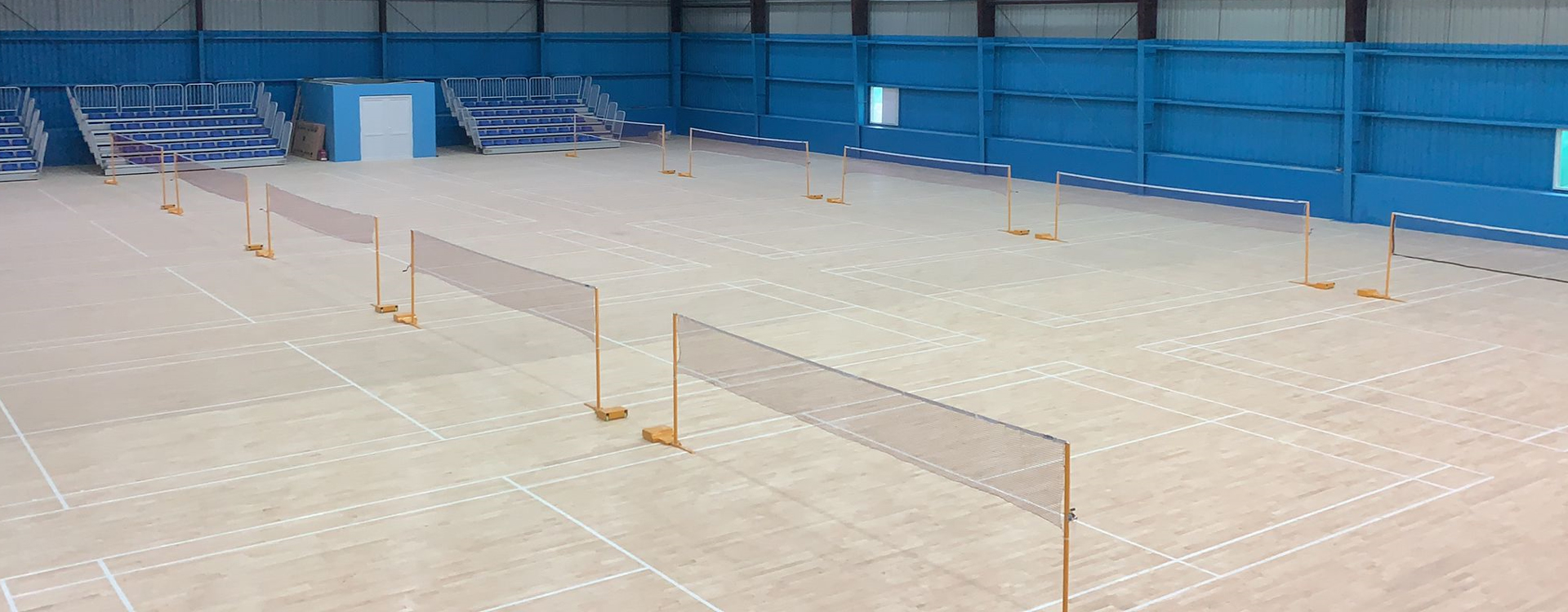
Training Outcomes and Injury Prevention
How Sports Infrastructure Impacts Training Outcomes and Injury Prevention
Ask any serious coach what separates a good training environment from a great one, and the answer rarely starts with coaching philosophy or nutrition plans. It starts with infrastructure. Infrastructure isn’t the background. It’s the foundation.
What “Sports Infrastructure” Actually Means
When most people hear “sports infrastructure,” they picture stadiums and Olympic arenas. But infrastructure touches every training environment, not just the elite ones. Sports infrastructure is the complete physical ecosystem within which athletes train and compete.
Various arenas, buildings, permanent facilities, and more are part of the sports infrastructure used for games, practices, classes, and general community health and wellness. Each component shapes what athletes can do, how safely they can do it, and how consistently they can do it week after week.
Dayal Sports: Infrastructure Built for Development at Every Level
Dayal Sports was established around one conviction: that every athlete deserves the infrastructure to develop to their full potential. That belief shapes everything from their Olympic-standard flooring systems to their complete facility design and installation services.
Dayal & Partners are the professional manufacturers and installers of Olympic/International sports floors with an advanced engineering system and support services that combine research and development, design, production, construction, and installation together. Their products have passed professional performance tests made by national sports quality supervision and inspection centers, fire resistance level tests for flooring systems, and overall engineering environment air quality detection tests.
Dr. Yuva Dayalan and partners have independently developed more than a dozen products, including training equipment, robots, and floor patents that have passed various quality tests with international and Olympic standard accreditations.
Here’s how each infrastructure component in the Dayal range contributes directly to training outcomes and injury prevention:
Wooden Flooring – Maximum Performance for Indoor Court Sports
Dayal’s 5-layer maple wooden flooring system is the gold standard for badminton, basketball, volleyball, and multipurpose indoor courts. The layered suspension system provides:
- Shock absorption – that protects joints during high-intensity training
- Consistent ball rebound – that enables accurate technical skill development
- Controlled traction – calibrated for fast lateral movement without locking
- Energy return – through the suspension system that reduces fatigue
- Surface uniformity – across the entire playing area for reliable training conditions
Training outcome benefit: Athletes can train at full intensity without the body-armor compensation that hard surfaces create. Technical development is faster because surface feedback is consistent.
Injury prevention benefit: Reduced joint loading on every landing and pivot. Lower cumulative impact load across full training seasons.
PVC / Hova Courts – Reliable Performance Across Multi-Use Facilities
Dayal’s PVC sports flooring delivers professional court performance with the installation flexibility needed for school halls, community centers, and multi-use indoor spaces. The foam buffer layer provides genuine shock absorption, and the anti-slip surface maintains safe traction across the full playing area.
Training outcome benefit: Schools and academies with PVC courts provide students and athletes with surfaces that properly replicate competitive conditions.
Injury prevention benefit: Consistent grip prevents the slip injuries that dominate injury statistics in indoor court sports. The cushioning layer reduces impact load compared to standard flooring.
PU Flooring – Cushioned, Seamless Surfaces for Gym and Fitness Training
Polyurethane flooring is specifically suited to training areas where athletes spend long periods on their feet, perform floor-based exercises, or engage in high-repetition strength training. The seamless installation eliminates joint edges and trip hazards, and the cushioning properties reduce fatigue during standing work.
Training outcome benefit: Athletes in conditioning sessions can sustain higher training volumes with less physical cost, improving the quality of gym-based development work.
Injury prevention benefit: Seamless surface eliminates trip and edge hazards. Cushioning reduces lower limb fatigue during extended conditioning sessions.
Anti-Glare Lighting – Seeing Clearly to Train Safely
Dayal’s anti-glare lighting is engineered specifically for sports environments. Uniform illumination across the court or track prevents the visual compensation that leads to reaction time errors and tracking mistakes, a direct injury and performance variable.
Training outcome benefit: Clear, consistent illumination allows athletes to train at higher visual intensity, developing sharper tracking and reaction skills.
Injury prevention benefit: Reduced glare and shadow means athletes can see court lines, shuttle movements, and fellow players clearly, reducing collision risks and surface misjudgments that cause falls and ankle injuries.
PEB Structure – The Building That Enables Everything Else
A Pre-Engineered Building is the structural shell that makes all of this possible in the first place. Dayal’s PEB structures are designed specifically for sports applications, accounting for clear-span requirements, ventilation needs, lighting integration, and acoustic properties.
Training outcome benefit: The physical structure of the facility shapes what training activities are possible. A properly designed sports hall allows for full-court practice, accurate shuttle flight, and the court configurations needed for serious training.
Injury prevention benefit: Proper ceiling heights, adequate ventilation, and designed-in acoustic dampening all contribute to a physical environment where athletes can train safely and sustainably.
Final Thoughts
Infrastructure is not separate from training and development. It is a direct input into both.
The floor sets the ceiling on training intensity. The surface determines injury risk. The lighting quality shapes visual development. The structural design determines what activities are even possible. The consistency of every element shapes whether skills developed in training transfer reliably to competition.
Sports participation depends not only on individual motivation but also on the availability, accessibility, and activation of local sports infrastructure. For athletes and coaches, these conditions directly affect training continuity, program viability, and development opportunities. Dayal Sports exists to make that investment possible for every facility, every budget, and every athlete who steps onto the court.
Athlete Safety & Performance
Why Professional Sports Flooring Matters for Athlete Safety & Performance
Most people walk into a sports facility and notice the court lines, the lighting, and the equipment. What they don’t think about is what’s beneath their feet, and yet it’s the one thing that touches every athlete, every step, every game.
The floor doesn’t just sit there. It absorbs impact, controls grip, dictates how fast an athlete can change direction, and quietly determines how much stress goes into knees, ankles, and lower backs over thousands of hours of play. Get it right and athletes perform better, stay healthy longer, and train harder. Get it wrong, and the consequences show up as injuries, burnout, and shortened careers.
This is why professional sports flooring isn’t a luxury; it’s a foundational part of any serious sports facility. Here’s everything you need to understand about what makes the right floor matter, and what to look for when choosing one.
What Happens When Athletes Train on the Wrong Floor
Before getting into what good flooring does, it’s worth understanding what bad flooring costs.
Concrete, ceramic tile, and ordinary hardwood floors without suspension systems create what’s called a “hard dead” surface. When an athlete lands from a jump on this kind of surface, the full force of the impact travels upward through the foot, ankle, shin, knee, and hip. There’s no absorption, no distribution, no return.
Over time, this leads to:
- Stress fractures in the feet and lower legs from repetitive hard-surface impact
- Shin splints from training on unforgiving surfaces
- Knee joint deterioration from unabsorbed landing forces
- Lower back pain from cumulative spinal compression
- Ankle sprains from an inconsistent grip or a slippery surface traction
- Muscle fatigue sets in faster because the body’s own tissue is doing all the shock absorption
The Five Core Properties of Professional Sports Flooring
Not every material works for every sport, but professional sports flooring, regardless of surface type, should consistently deliver five core properties.
1. Shock Absorption
Shock absorption is the most critical safety property. A good sports floor reduces the peak force transmitted to the athlete’s body during impact activities like jumping, sprinting, and landing.
Dayal uses a professional 5-layer suspension sports flooring system with excellent damping performance and a safe frictional coefficient to avoid such injuries.
2. Traction and Grip
Traction is the property that prevents slipping while still allowing smooth, controlled movement. It’s a balance between too little grip, and athletes slip dangerously; too much and sudden stops create knee and ankle torque injuries.
3. Ball Rebound Consistency
For racquet sports, basketball, and volleyball, how the floor interacts with the ball is as important as how it interacts with the player. A floor that produces inconsistent bounce creates unpredictable play conditions that disadvantage athletes and compromise the quality of training.
Wooden sports flooring is a specialised, multi-layered system using hardwoods like maple for indoor courts, providing optimal shock absorption, ball rebound, and player grip for basketball, volleyball, and racquet sports.
For professional competition venues, ball rebound consistency is a technical requirement, not just a preference.
4. Durability Under Heavy Use
A sports floor in a school, club, or commercial facility faces daily abuse, including dragging equipment, foot traffic, sweat, cleaning chemicals, and extreme loads from jumping athletes. A floor that degrades quickly becomes inconsistent, which means its safety and performance properties degrade too.
5. Surface Flatness and Consistency
An uneven floor is a dangerous floor. Bumps, warps, and inconsistent surfaces create unexpected changes in traction and rebound, increasing ankle injury risk dramatically. Professional sports floor installation includes precision leveling, sub-floor preparation, and post-installation testing to ensure surface uniformity across the entire playing area.
Dayal’s Flooring Solutions: Which Surface Fits Which Sport
Wooden flooring is considered to be the highest indoor sports flooring available and is more expensive than any other product offered for indoor sports.
Dayal’s flagship wooden flooring is a 5-layer maple court system specifically engineered for high-performance sports venues. The 5-layer sports flooring system is suitable for high-performance sports venues and has three basic functions: motor, protective, and technological. A big difference exists between Dayal’s 5-layer sports flooring and ordinary wood floors. Dayal flooring has a more complex structure, more layers, and higher requirements for physical and mechanical performance materials.
Best for: Badminton, basketball, volleyball, indoor tennis, multi-purpose indoor courts
Key benefits:
- Superior shock absorption through a layered suspension system
- Consistent ball rebound across the entire playing surface
- A warm, natural playing feel is preferred by professional athletes
PVC flooring from Dayal delivers professional-level performance in a more installation-friendly format. PVC Sports Flooring Surface has a moderate foam buffer layer that can provide users with comfort and safety, giving good grip and preventing injuries caused by playing on conventional floors.
Best for: Badminton, indoor volleyball, multi-use sports halls, school facilities, community centres
Key benefits:
- Anti-slip surface for safe lateral movement
- Foam buffer shock absorption layer
- Easy installation over existing substrates
PU Flooring
Polyurethane (PU) flooring is a seamless, poured surface that delivers exceptional cushioning and flexibility. Specialized PU flooring is used for weightlifting areas, yoga, pilates, and skating rinks, with both roll and tile formats available. It is highly preferred for its durability, environmentally friendly nature, non-slippery surface, impact absorption, and easy installation.
Best for: Indoor gyms, weightlifting platforms, yoga studios, multi-purpose fitness areas, martial arts halls
Key benefits:
- Seamless surface eliminates joints and trip hazards
- Superior cushioning for standing and floor-based activity
- Excellent grip even on wet surfaces
Dayal’s athletic tracks use EPDM rubber, a synthetic elastomer specifically engineered for outdoor track performance. Synthetic running track flooring is an engineered, all-weather athletic surface made from rubber and polyurethane binders, offering superior shock absorption, traction, and durability for safe, consistent performance in professional and recreational sports, featuring seamless designs, weather resistance, and customizable colors for various track events.
Best for: School athletic tracks, stadium running tracks, outdoor sports complexes, multi-sport facilities
Key benefits:
- Consistent cushioning across the full track circuit
- Weather-resistant performs in rain, heat, and cold
- UV-stable color that maintains line markings long-term
Artificial Turf
Dayal’s artificial turf systems replicate the playing properties of natural grass while eliminating the maintenance demands and seasonal variability that make natural grass impractical for high-use facilities.
Best for: Football, cricket outfields, hockey, outdoor multi-sport areas, school playgrounds
Key benefits:
- Consistent playing surface year-round, regardless of weather
- No watering, mowing, or seasonal reseeding
- Durable under high-frequency use
Sports and games flooring is drastically needed with high quality and easy to service after installation. Dayal’s interlocking flooring uses Virgin PP material, a food-grade material that is non-toxic and tasteless, anti-slipping with moderate/solid hardness and crystalline structure.
Best for: Temporary courts, multi-use outdoor areas, school playgrounds, community sports areas, facilities that need adaptable configurations
Key benefits:
- No adhesive installation tiles lock together mechanically
- Removable and reconfigurable as needs change
- Non-toxic, food-grade material is safe for children’s facilities
Acrylic Flooring
Acrylic coating is a patented hard acrylic paving material. The main resin is composed of high-hardness and dye-resistant acrylate emulsion polymer and hydrophobic nano-silica fibres, pigments and fillers, and other additives. Acrylic acid is a kind of high-performance sports paint suitable for sports and entertainment venues. It has incomparable wear resistance and vivid, lasting color.
Best for: Outdoor tennis courts, basketball courts, badminton outdoor courts, multi-sport outdoor areas
Key benefits:
- Hard-wearing surface suited to heavy outdoor use
- Customizable hardness and grip through formulation adjustment
- Vivid, UV-resistant color for clear court marking
Final Thoughts: The Floor Beneath Everything
Sports facilities invest in coaching, equipment, lighting, and infrastructure. The floor, the single element every athlete contacts on every move, deserves the same level of consideration.
Professional sports flooring protects athletes from the cumulative injuries that end careers. It enables higher training intensity, faster skill development, and better competitive performance. It maintains the consistent surface properties that make practice meaningful and competition fair. And built to Olympic standards, it does all of this reliably for decades.
Dayal Sports was founded on the conviction that every athlete, from a school student stepping onto their first badminton court to a professional preparing for international competition, deserves the best foundation beneath their feet. That conviction is built into every layer of every floor they design, manufacture, and install.
When you invest in the right floor, you’re investing in every athlete who will ever play on it.
Sports Flooring for Modern Sports Facilities
The Complete Guide to Sports Flooring for Modern Sports Facilities
Walk into any world-class sports facility today, and the first thing you notice, even before the lights, the equipment, or the crowd, is the floor. It’s the surface your athletes train on every single day. It absorbs every jump, every sprint, every lateral cut, every hard landing. It’s the foundation that protects your players. And in modern sports, where performance margins are razor-thin, and injury prevention is everything, the floor underneath your feet matters more than most people ever stop to think about.
That’s what this guide is about. Whether you’re building a brand-new sports complex, upgrading an aging facility, or trying to make sense of the overwhelming number of flooring options out there, this is the complete picture of sports flooring for modern sports facilities, from materials and mechanics to installation and long-term care.
And if you want the short answer to “Who gets this right?” It’s Dayal Sports Flooring.
Why Sports Flooring Is the Foundation of Every Modern Facility
Here’s a truth most facility managers learn the hard way: you can invest in premium lighting, top-of-the-line equipment, and state-of-the-art training technology, but if the floor is wrong, none of it matters as much as it should.
Sports flooring for modern sports facilities carries a different burden than ordinary flooring. It’s not just about looking good. It has to perform on three critical dimensions simultaneously:
1. Motor Function: The floor must support athletic movement sprinting, pivoting, jumping, and landing, without slowing athletes down or creating unpredictable friction. Every sport demands a specific interaction between shoe and surface: too much grip causes knee injuries; too little causes slips and falls.
2. Protective Function: This is the one that keeps sports medicine doctors busy. During any training session or competition, enormous forces travel through an athlete’s feet, ankles, knees, and lower back. A floor without proper shock absorption turns those forces into micro-injuries that accumulate over the years. As Dayal Sports points out, “if athletes take exercises or sport on a surface with no suspension or recommended suspension, they will get hurt.” The right flooring acts as a buffer between the athlete and concrete.
3. Technological Function: Modern sports demand surfaces engineered with precision-specific ball rebound ratios, calibrated surface friction, consistent performance across temperature changes, and compliance with international standards from bodies like FIBA, IAAF, and ITF. This is engineering, not just flooring.
Dayal Sports Flooring understands all three. Our products meet Olympic and international standard parameters, passing rigorous tests by national sports quality supervision centers, fire resistance inspections, and environmental air quality assessments.
The Sports Flooring Landscape:
Dayal’s 5-Layer Suspension Maple Wooden Flooring System is a masterclass in biomechanical design. The system isn’t just wood planks on a subfloor; it’s a carefully engineered stack. A floor that feels alive underfoot, responsive, fast, and forgiving at the same time. Wooden flooring from Dayal is available in perfect thicknesses with a matte surface finish, teak and maple options, and specifications designed for badminton, basketball, volleyball, and multipurpose sports halls.
Why Dayal: Olympic-standard specifications, proven suspension engineering, durable finish that maintains performance year after year.
For facilities that need high performance without the full investment of wood, PVC sports flooring has become the dominant choice in modern sports infrastructure worldwide. It’s why you see it in school gyms, community sports halls, training academies, and club-level competitive venues across Asia and the globe.
Dayal’s PVC/Hova Court Flooring brings together everything a busy modern facility needs: superior grip, outstanding shock absorption, durability that holds up through thousands of hours of play, and a surface that can be installed directly over sprung subfloors to modify elastic performance characteristics.
Best for: Indoor sports courts of all types, multi-sport facilities, training centers, schools, and community halls.
Why Dayal: Broad thickness range, proven sports series formulations, suitable for virtually every indoor sport.
Dayal’s PU Flooring is built on their signature 5-layer sports flooring system, which has three core engineering functions: motor, protective, and technological. The system involves layers of SBR shockpad, PU sealer, self-leveling PU, and a top coat construction that Dayal notes is fundamentally different from ordinary wood flooring in its complexity, material requirements, and performance outcomes.
Why Dayal: 5-layer system with proven suspension mechanics, local repair capability, customizable colors, and pan-India installation.
Dayal’s Acrylic Flooring is formulated around high-performance acrylic acid, which they describe as “a kind of high-performance sports paint, suitable for sports and entertainment venues.”
Personalized color options so facilities can brand their courts exactly as they want. The 8–10 year service life guarantee on Dayal acrylic surfaces tells you everything about their confidence in the product.
Best for: Tennis courts, outdoor multi-sport surfaces, school and community facilities, and any venue needing weather-resistant performance surfaces.
Why Dayal: ITF-certified system, 8–10 year guaranteed lifespan, UV-resistant color, precision multi-stage installation.
5. Athletic Running Tracks
Dayal’s Athletic Running Tracks are built for the level of precision. The surface material is synthetic, weather-resistant, and engineered for the specific demands of track and field.
Best for: Olympic and competition athletics tracks, school and university running facilities, community fitness circuits, and indoor training runways.
Why Dayal: IAAF-compliant specifications, precise foundation requirements, professional installation team.
6. Artificial Turf
Dayal’s Artificial Turf is manufactured from PE (polyethylene) and polypropylene materials, available in a 40mm thickness with 35mm pile height. The color is natural green, the construction is designed for all-weather use, and the applications span every sport that plays on grass: football, hockey, rugby, cricket, kabaddi, and more.
Best for: Football pitches, hockey fields, multi-sport outdoor areas, school playgrounds, community sports hubs, and any facility needing a weather-independent grass-type surface.
Why Dayal: PE/polypropylene construction, natural look and feel, all-weather performance, available for football, hockey, and multi-sport use.
7. PP Interlocking Flooring
Dayal emphasizes the material quality: “Virgin PP material is a food-grade material that is non-toxic and tasteless, anti-slipping with moderate/solid hardness and crystalline.” The same material used in food-grade applications tells you a lot about its safety and quality profile.
The interlocking design means installation is fast, modification is easy, and if a tile gets damaged, you replace that tile, not the entire floor.
Best for: Multi-use facilities, temporary courts, school halls, community centers, and any venue needing flexible or portable sports surfaces.
Why Dayal: Virgin PP construction, anti-slip surface, easy installation and maintenance, non-toxic and food-grade material quality.
Your Floor Defines Your Facility
The most important thing to understand about sports flooring for modern sports facilities is this: it’s not a commodity decision. Every material, every layer, every specification has a consequence for an athlete’s health, performance, and safety.
The facilities that take it seriously, the ones that get the engineering right from the ground up, are the ones that produce better athletes, run for longer without costly repairs, and build the kind of reputation that draws players and coaches for decades.
Dayal Sports Flooring exists precisely for this. Founded by a former international athlete, engineered to Olympic standards, delivered with love for the sports community across Asia and the globe, they bring together the full range of modern sports flooring solutions under one roof.
Whether you’re laying your first court or overhauling an entire sports complex, the question isn’t whether to invest in the right floor. It’s who you trust to get it right.