
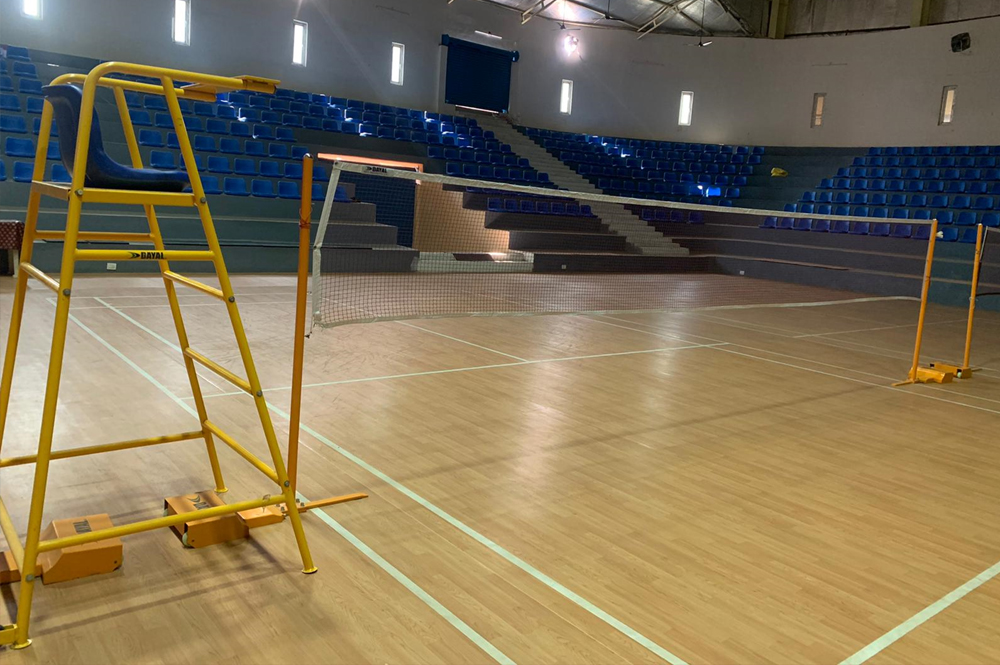
What Are the Differences Between Sports Flooring Options for Indoor Badminton Courts vs Other Indoor Sports?
When it comes to indoor sports flooring, one size never fits all. Different sports demand different types of surfaces, and this is especially true for badminton courts. If you’re planning to build or upgrade an indoor facility, understanding these differences can help you make the right choice.
At Dayal Sports, the focus is always on designing flooring systems that match the specific performance needs of each sport. Let’s explore how badminton flooring stands apart from other indoor sports flooring options.
Why Badminton Flooring Needs Special Attention
Badminton is a fast-paced sport that involves quick direction changes, jumps, and lunges. Players are constantly moving, stopping, and accelerating within seconds. Because of this, the flooring must provide the right balance of grip, cushioning, and shock absorption.
Unlike sports like basketball or volleyball, badminton relies heavily on precise footwork and lightweight movement. Even a small difference in surface friction or cushioning can affect performance and increase the risk of injury.
Common Flooring Options for Indoor Badminton Courts
Indoor badminton courts typically use either wooden flooring systems or synthetic materials like PVC or vinyl.
Wooden sports flooring, especially maple-based systems, is widely used for professional and tournament-level courts. These floors are built with multiple layers, including shock-absorbing pads and moisture-resistant layers. This structure helps absorb impact and protect joints during intense play. Dayal Sports uses advanced multi-layer systems that are designed to reduce stress on ankles, knees, and the spine while maintaining consistent performance.
Another popular option is PVC or vinyl sports flooring. These are often used in academies and multi-purpose halls because they are cost-effective, easy to maintain, and provide good grip. PVC flooring is available in different thicknesses and can be customized for badminton and other sports, making it a flexible solution.
How Badminton Flooring Differs from Other Indoor Sports Flooring
The biggest difference lies in how the surface interacts with player movement.
For badminton, the flooring must offer excellent grip without being too sticky. Players need to slide slightly during lunges but still maintain control. In contrast, basketball courts prioritize ball bounce and durability, while volleyball courts focus more on impact absorption for jumps.
Badminton flooring also requires more refined shock absorption. Since players frequently perform quick lunges and recoveries, the floor must reduce impact stress effectively. Dayal Sports’ multi-layer wooden systems, for example, are designed to absorb a significant portion of the impact force, helping prevent injuries during long training sessions.
Another key difference is surface speed. Badminton courts are designed for controlled movement, whereas sports like futsal or basketball may use surfaces that allow faster ball movement and higher traction.
Multi-Sport Flooring vs Dedicated Badminton Flooring
Many indoor facilities opt for multi-sport flooring, such as acrylic or PVC systems, because they can support multiple activities. Acrylic flooring, for instance, is durable, customizable, and suitable for various sports, including badminton, tennis, and basketball.
However, multi-sport surfaces often involve compromises. While they perform reasonably well across different activities, they may not deliver the same level of comfort and performance as a dedicated badminton floor.
Dedicated badminton flooring, especially wooden or cushioned synthetic systems, is engineered specifically for player safety and movement efficiency. These floors provide better grip, improved shock absorption, and more consistent playing conditions.
Performance, Safety, and Durability: Key Differences
Badminton flooring is more focused on player safety and precision movement. It prioritizes cushioning, joint protection, and controlled grip.
Other indoor sports flooring may prioritize durability, ball response, or heavy impact resistance. For example, gym flooring is designed to handle heavy weights, while basketball courts emphasize rebound and surface hardness.
According to industry practices, sports flooring in general must balance safety, performance, and durability, but the emphasis changes depending on the sport.
Choosing the Right Flooring for Your Facility
If your primary focus is badminton, investing in specialized flooring is always the better choice. It enhances player performance, reduces injury risks, and creates a professional playing experience.
If your facility is multi-purpose, then high-quality PVC or acrylic flooring can be a practical alternative. The key is to ensure that the surface still offers adequate cushioning and grip for badminton players.
With expert solutions from Dayal Sports, you can choose from a wide range of flooring systems tailored for both dedicated badminton courts and multi-sport indoor arenas.
Final Thoughts
Indoor sports flooring is not just about aesthetics or cost; it directly affects how the game is played and how safe the players feel. Badminton courts require a more specialized approach compared to other indoor sports due to the nature of the game.
By understanding these differences and selecting the right flooring, you can create a space that delivers both performance and safety. Whether it’s a professional academy or a recreational facility, the right flooring makes all the difference.