
Feather vs Synthetic Shuttlecock: Performance and Durability Compared
Every badminton player asks this question at some point: Feather or synthetic shuttlecock, which one should I be using?
The answer isn’t universal. It depends on your skill level, how often you play, whether you’re training or competing, and honestly, what you’re willing to spend. Both types have genuine advantages and real trade-offs that matter when you’re actually on the court.
Dayal Sports, founded by Dr. Yuva Dayalan, a former International Badminton Player, understands this choice well. As a complete badminton products and sports infrastructure supplier across India and Asia, Dayal offers shuttles alongside rackets, shoes, bags, and court installations. Here’s a straightforward comparison to help you decide.
What Each Type Actually Is
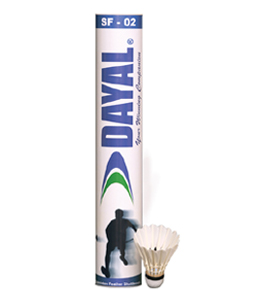
Feather shuttlecocks are made from 16 natural duck or goose feathers arranged symmetrically around a cork base. Goose feathers are preferred by elite players for their consistency and durability, though duck feathers are more common at intermediate levels.
Synthetic shuttlecocks, also called nylon or plastic shuttles, use a plastic or nylon skirt attached to a rubber or foam base. They’re engineered to mimic the flight of feather shuttles while lasting significantly longer.
The materials are completely different. The performance is noticeably different. And the cost difference is substantial.
Performance: How They Fly and Feel
This is where the difference becomes obvious to anyone who has played with both.
Flight characteristics:
Feather: Sharp, steep drop after reaching the peak. The shuttle decelerates quickly and falls almost vertically, the flight pattern you see in every professional match.
Synthetic: Flatter trajectory with slower deceleration. The shuttle floats longer and travels slightly farther with the same force. Takes more time to drop.
Speed and control:
Feather: Greater initial speed on net shots. Responds crisply to deceptive flicks, slices, and spin shots. The feathers grip the string bed better, giving players more control over placement and touch.
Synthetic: Faster overall flight during rallies, especially on smashes, which makes them harder to return at speed. But less responsive to subtle wrist work and touch shots.
Sound and feel:
Feather: The distinctive “thwack” sound when struck cleanly. Feels natural and satisfying.
Synthetic: Quieter, duller sound. Doesn’t provide the same tactile feedback.
Why it matters:
If you’re training for competitive play, the flight characteristics of feather shuttles match what you’ll face in tournaments. Skills developed with synthetic shuttles don’t transfer perfectly because the physics are different. But for recreational play, practice drills, and building fitness, synthetic shuttles work just fine.
Durability: The Honest Comparison
Feather shuttlecocks:
- Lifespan: 10-15 hours of play on average before feathers break or the shuttle loses shape
- Break faster during hard-hitting rallies and smashes
- Damaged by rough play, poor technique, and mis-hits
- Humidity-sensitive feathers become brittle and snap faster in dry conditions
- Require proper storage in sealed tubes with controlled humidity
Synthetic shuttlecocks:
- Lifespan: 20-25+ hours of play, sometimes significantly longer
- Extremely resistant to wear, it can handle hundreds of hard smashes without breaking
- Perform consistently across varying weather conditions
- Less affected by humidity, dust, or temperature swings
- No special storage needed
The cost reality:
A tube of quality feather shuttles costs ₹300-800+, depending on brand and grade. You’ll go through them quickly if you play regularly. A tube of synthetic shuttles costs ₹100-200 and lasts multiple sessions. Over a year of frequent play, the cost difference adds up substantially.
Who Should Use What?
Use feather shuttlecocks if:
- You’re playing at an intermediate to advanced level
- You’re training for district, state, or national competitions
- You want to develop touch, control, and deceptive shots
- You’re playing indoors with proper court conditions
- The budget allows for the higher ongoing cost
Use synthetic shuttlecocks if:
- You’re a beginner still learning the basics
- You’re playing casually with friends or family
- You’re practicing drills, footwork, or fitness training
- You’re playing outdoors or in dusty/humid conditions
- You want maximum value and durability
Dayal Sports carries a complete range of badminton products as part of their sports infrastructure and equipment portfolio across India and Asia. Whether you’re setting up a school badminton program, a club academy, or need equipment for your facility, Dayal’s team specifies the right products for your level.