
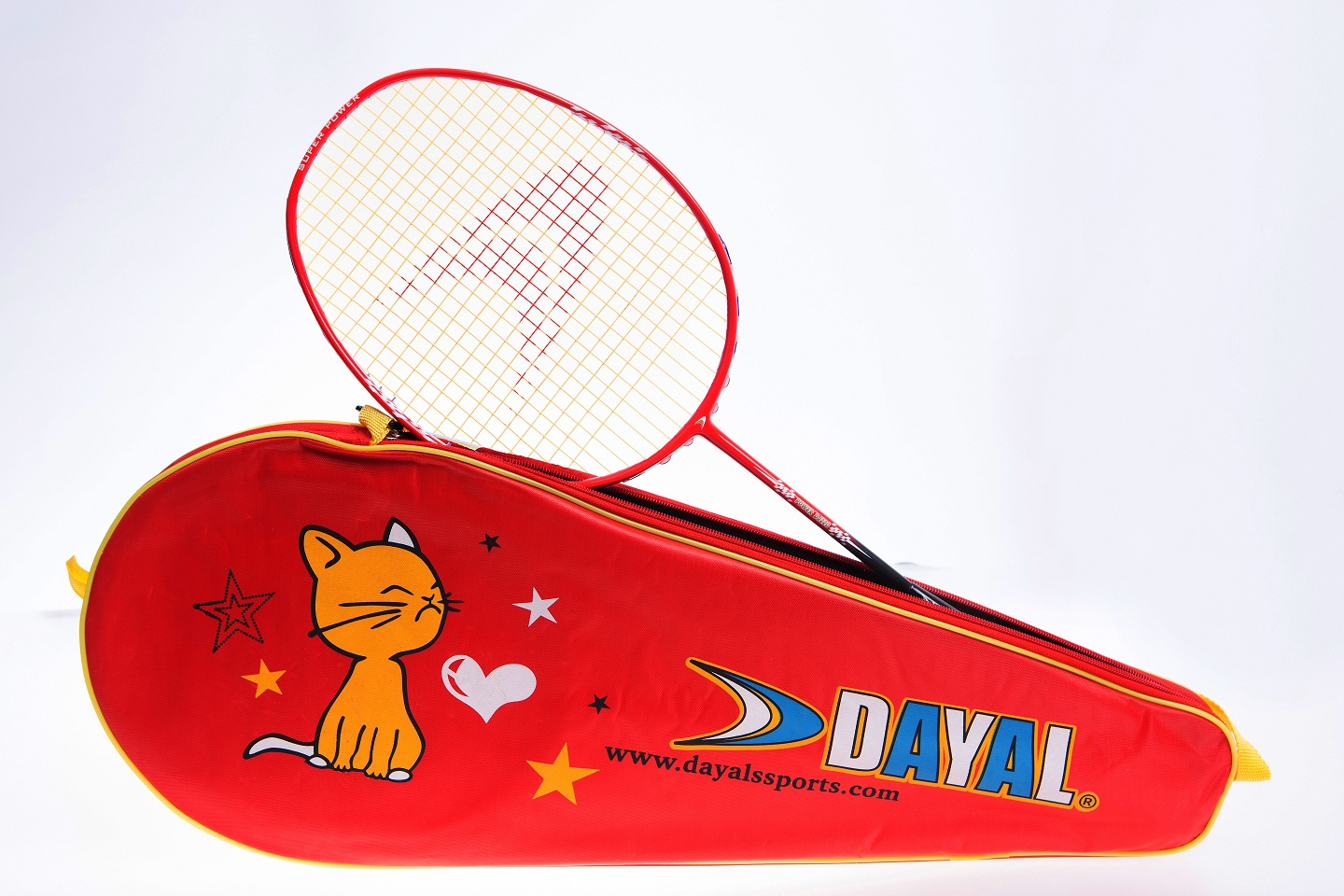
How Do Dayal Professional Badminton Rackets Compare to International Big-Brand Entry-Level Graphite Series?
It’s a question every intermediate player in India eventually asks: Should I stick with a well-known international brand at the entry level, or does a serious, home-grown option like Dayal Sports actually hold its own? The answer is more interesting than most players expect, and once you look at the actual specifications side by side, the comparison tilts more favorably toward Dayal than the brand recognition gap might suggest.
What “Entry-Level Graphite” Actually Means from a Big Brand
When international brands sell entry-level graphite rackets in India, you’re typically looking at T-joint or single-joint frames using lower-grade carbon composites, string tensions capped at 22-24 lbs, weights around 85-88 grams, and grip sizes limited to one or two options. These rackets are designed to introduce players to graphite performance at a price point, but the materials and engineering are deliberately simplified to protect the higher-tier lines. The “graphite” label is accurate, but it covers a wide spectrum of actual carbon quality.
Where Dayal’s Racket Range Stands on Specifications
This is where the comparison gets genuinely interesting. Dayal Sports’ professional and semi-professional racket lineup, developed under the leadership of Dr. Yuva Dayalan, a former Indian International Badminton Player, is built on real carbon composites with specs that compete seriously at the intermediate level.
The Dayal Titanium 20, priced at around Rs 2,750, uses T700 Carbon with an Ultra Power Frame technology, weighs just 79 grams, supports string tension up to 28 lbs, and has a standard isometric head shape with a 285mm balance point. That’s the same carbon designation (T700) used in mid-range rackets from established international brands, not the entry-level composite grade that often gets lumped under the generic “graphite” tag. Its twin, the Dayal Titanium 10, shares the T700 Carbon construction with a Defense Precision playing style and identical weight and balance specs.
Moving into the advanced tier, the Dayal Taakae 090 uses a premium 40T Shaft with a T700 Frame combination, supports string tensions up to 30 lbs, and is built for all-around amateur play at around Rs 5,600. The 40T shaft designation indicates a high-modulus carbon fiber, a specification that typically places a racket well beyond entry-level territory in any brand’s lineup.
Even the more accessible models in the range hold their ground. The Y Series rackets (Y40, Y50, Y60, Y80, Y90) use T30 Carbon Graphite or 24T Carbon, weigh between 79–80 grams, and are priced around Rs 1,650, competing directly with, and often undercutting, equivalent graphite entry-level options from international brands while offering comparable or better string tension support of up to 26-28 lbs.
The Nano Series and Max Power Series, priced around Rs 1,675, use graphite frames with Nano Tec and Power Frame technologies, respectively, targeting offensive players who want a head-heavy setup without paying a premium for a brand name they may never fully need at their current level of play.
The Real Difference: Value, Variety, and the Player-First Approach
What separates Dayal from a big-brand entry-level line isn’t just the price-to-spec ratio; it’s the breadth of options within the same price range. Where most international brands offer one or two entry-level graphite models with a single playing style, Dayal’s range covers control and touch players (Titanium 20), offense and smash players (Nano Series, Max Power), defense precision players (Titanium 10), all-rounders (Y90, Taakae 090), and fast-reaction players (Y80) all at transparent, competitive price points.
This variety matters enormously in practice. A beginning club player and an intermediate tournament player have fundamentally different needs from a racket, and being able to choose a frame tuned to your playing style rather than the one graphite option a big brand offers at your price ceiling is a meaningful advantage.
Dayal Sports was founded on the philosophy that every player deserves access to genuinely good equipment. That principle shows up clearly in the racket lineup, real carbon specifications, honest weight figures, and a range built for how Indian players actually play, not for how they fit into a global tier chart designed for markets with very different price realities.
Should You Choose Dayal Over a Big-Brand Entry-Level Racket?
If you’re deciding between a Dayal graphite racket and a big-brand entry-level graphite series at a similar price point, the question to ask is simple: Are you paying for performance or paying for a logo? At the Rs 1,650 to Rs 2,750 price range, Dayal’s material specifications T30 to T700 carbon, 26-28 lbs string tension support, 79-80 gram frames, 675mm full length genuinely compete with, and in several cases exceed, what big brands offer at comparable price points in the Indian market.
The brand recognition gap is real, but for a player who is serious about developing their game, the specs don’t lie. And when the brand behind those specs was built by a former international player who understands exactly what Indian badminton players need, that’s a foundation worth trusting.