
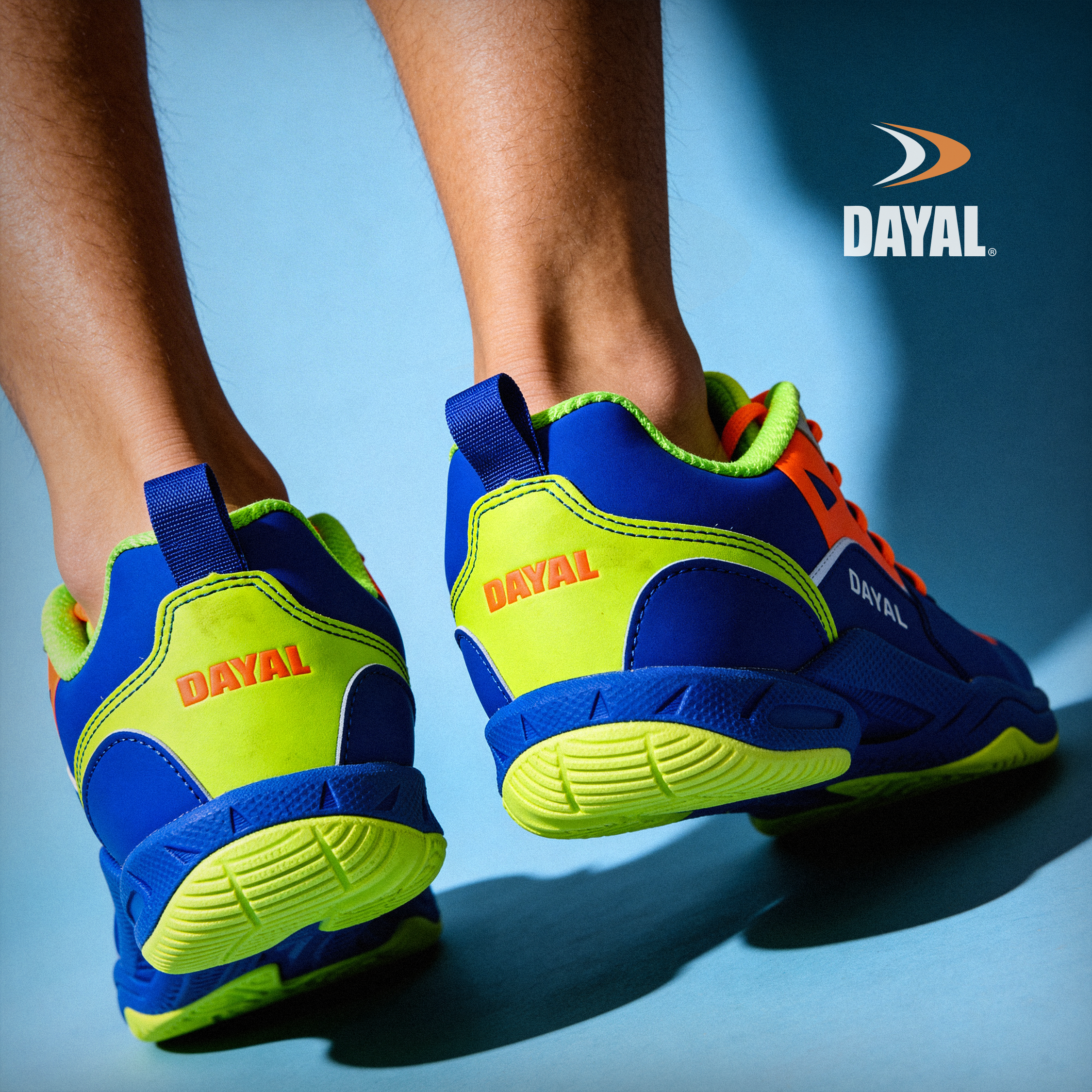
Badminton Shoe Buying Guide: Cushioning, Grip, and Court Compatibility
A lot of players invest in a good racket and barely think twice about their shoes. That is a mistake. In badminton, your feet are working constantly, shifting direction, jumping, landing, and pushing off in split seconds. The wrong shoes make all of that harder and riskier. Dayal Sports carries badminton shoes built with the right support and grip for court play, so you are not left guessing when it is time to buy.
Why Regular Sports Shoes Do Not Work
Running shoes, training shoes, and general sports sneakers are not designed for badminton. They are built for forward movement, not lateral cuts and quick directional changes. Using them on a badminton court increases your risk of ankle rolls and knee strain. The soles are also often too thick and heavy, which slows you down. Badminton-specific shoes are designed with all of this in mind, and the difference in comfort and safety is very noticeable once you try them.
Cushioning: More Is Not Always Better
Good cushioning protects your joints when you land after a jump smash or lunge for a drop shot. But there is a balance to get right here. Too much cushioning makes the shoe feel unstable and disconnected from the court, which affects your footwork precision. Too little cushioning puts strain on your knees and heels over time.
The ideal badminton shoe has targeted cushioning, usually placed at the heel and forefoot where impact is highest. This gives you protection where it matters without making the shoe feel spongy or unreliable underfoot.
What to Look for in the Midsole
The midsole is the layer between the outer sole and your foot. In badminton shoes, a firm but responsive midsole works best. It absorbs shock on landing and gives you a quick, springy return when you push off for your next step. Softer midsoles wear out faster and lose their responsiveness, so pay attention to the material quality, not just how it feels in the shop on day one.
Grip: The Feature That Keeps You Safe
Grip is arguably the most important feature in a badminton shoe. The outer sole needs to hold the court surface firmly without sticking so hard that your foot cannot pivot cleanly. Most quality badminton shoes use a non-marking rubber sole with a herringbone or wavy tread pattern. This design provides grip in all directions, which is exactly what you need when you are changing direction several times in a single rally.
A shoe with poor grip on a smooth wooden or PVC court is genuinely dangerous. Slipping mid-rally does not just cost you the point. It can cause serious injuries.
Court Surface Matters More Than You Think
Not all courts are the same, and your shoe sole needs to match the surface you play on most often. Wooden floors, PVC Hova courts, acrylic courts, and synthetic surfaces all have slightly different grip requirements. Most badminton shoes work across these surfaces, but it is worth checking whether the sole is rated for the specific court type you play on regularly.
Dayal Sports installs several types of sports flooring, including PVC Hova courts, wooden flooring, and hard acrylic courts, so if you are outfitting a facility or simply want to understand what surface your court uses, that information is available.
Lateral Support Keeps Ankles Safe
Badminton involves a lot of sideways movement. Your shoe needs to support your ankle when you lunge wide for a net shot or push off hard from one corner to the other. Look for a shoe with reinforced sides and a snug fit around the midfoot. A loose shoe with no lateral support is one of the fastest ways to end up with a twisted ankle.
The upper material of the shoe plays a role here too. Mesh uppers are lighter and breathe better, but they offer less structure. Synthetic leather or reinforced mesh uppers provide a better balance of support and ventilation for most players.
Toe Box and Fit: Do Not Ignore This
The toe box is the front part of the shoe where your toes sit. In badminton, you frequently land on the ball of your foot and push off from your toes. A toe box that is too narrow squeezes your toes together and causes discomfort during long sessions. One that is too wide lets your foot slide forward on sudden stops, which causes blisters and reduces control.
Your badminton shoe should fit snugly but not tightly. There should be just enough room at the front for your toes to sit naturally without pressing against the front of the shoe.
Weight of the Shoe
Lighter shoes allow you to move faster and reduce fatigue during long matches. Most quality badminton shoes aim for a balance between being light and providing enough structure to keep your foot supported. If you pick up a badminton shoe and it feels heavy, that extra weight will be on your feet for the full duration of play. It adds up more than you expect, especially in the second and third games of a close match.
When to Replace Your Badminton Shoes
Shoes do not last forever, even if they still look fine on the outside. The cushioning in the midsole breaks down with regular use, usually after six to twelve months of consistent play. Once the cushioning is gone, the shoe no longer protects your joints the way it should. The outsole also wears down over time, and reduced grip on the court is a clear sign that it is time for a new pair. Do not wait for the shoe to fall apart before replacing it.
Dayal Sports has a range of badminton shoes for different playing levels, built to handle the demands of regular court play with good support and grip.
Questions and Answers
Q: Can I wear running shoes for badminton if I am just playing casually?
A: Technically, you can, but it is not a good idea even for casual play. Running shoes are designed for forward motion and have soles that are too thick and rounded for the quick lateral movements badminton requires. They also tend to have less grip on smooth indoor court surfaces. If you are playing regularly, even at a casual level, a proper badminton shoe will feel noticeably more comfortable and will reduce the strain on your ankles and knees over time.
Q: I bought badminton shoes six months ago, but they already feel less cushioned. Is that normal?
A: Yes, that is completely normal depending on how often you play. The midsole cushioning in sports shoes compresses with use and gradually loses its ability to absorb impact. If you are playing three or more times a week, six months of use is already significant wear. The cushioning breaking down is actually a bigger concern than the outer sole wearing out, because you may not feel it happening gradually until your joints start to feel sore after sessions. It is worth replacing them if the cushioning no longer feels supportive.
Q: Does the type of court surface affect how quickly badminton shoe soles wear out?
A: Yes, it does. Rougher or more abrasive court surfaces wear down the rubber sole faster than smooth wooden or PVC courts. Acrylic and concrete-based outdoor courts are particularly hard on soles. If you play on multiple surface types, your shoe sole will wear unevenly in some cases. Checking the grip regularly and replacing shoes when the tread is noticeably flattened is the best way to stay safe and maintain good traction on whatever surface you play on.
For more product details, visit www.dayalssports.in. For contact details and to speak with the team, visit www.dayalssports.com.